Every finish makes a promise on day one. Paint promises color. Veneer promises warmth. The real question is what that surface looks like after five summers of UV exposure, a few freeze-thaw cycles, and the occasional pressure wash.
PVC profile lamination has quietly changed the math for manufacturers, builders, and property owners. Instead of coating a profile and hoping the finish holds, lamination bonds an engineered decorative film to the substrate, creating a surface that behaves less like paint and more like part of the product.
At Stealth Finishing, PVC profile wrapping has been the core of the business since 2016. Here’s how the process actually works, and why it outperforms the finishing methods it replaced.
What is PVC Profile Lamination, Exactly?
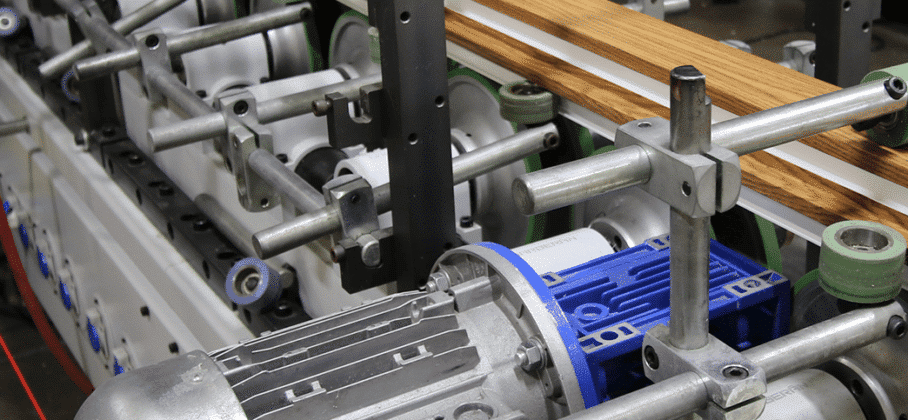
PVC profile wrapping is the process of permanently bonding a decorative laminate film to a linear profile using heat-activated adhesive and a sequence of precision pressure rollers. The “profile” can be a window frame extrusion, a piece of trim, a soffit panel, or any other component with a consistent cross-section.
In practical terms, it turns the surface into part of the product.
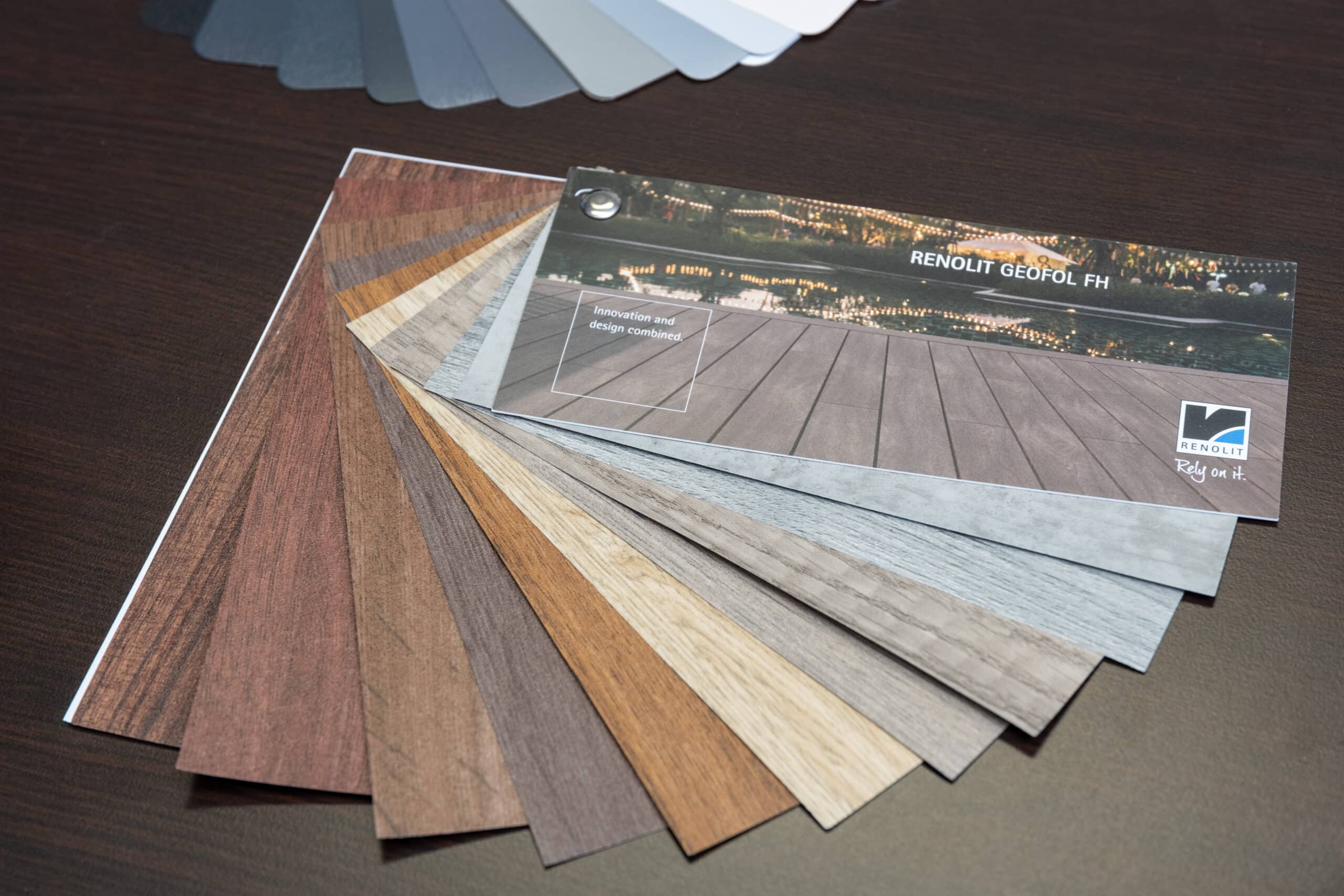
The films themselves do the heavy lifting. Exterior-grade acrylic and vinyl laminates are engineered with UV-stable surface layers and realistic embossed textures, available in solid architectural colors and woodgrains ranging from crisp Black Onyx to warm Golden Oak.
The result: decorative PVC profiles that deliver the look of a hand-painted or natural wood surface with none of the upkeep.
One important distinction: lamination is not a coating. It’s a film-plus-adhesive system that becomes a composite surface, which is exactly why it performs so differently from traditional methods.
Inside the Process of Decorative PVC Profiles
A professional PVC lamination process runs through five tightly controlled stages:
- Substrate inspection and preparation. Profiles are checked for dimensional consistency and cleaned to ensure the bonding surface is free of dust, oils, and extrusion residue. Some substrates also receive an adhesion promoter.
- Adhesive application. A thin, uniform film of moisture-curing polyurethane (PUR) hot-melt adhesive is applied to the profile, enough for full coverage but never enough to telegraph through the finish.
- Film application. The profile travels through a wrapping line where contoured rollers press the laminate into every groove, radius, and edge. This is where machine calibration separates a flawless wrap from a flawed one.
- Curing. Over the next one to three days, the PUR adhesive reacts with ambient moisture and cross-links into an irreversible thermoset bond. Once cured, it cannot be remelted by summer heat the way conventional adhesives can.
- Quality control. Finished profiles are inspected for bubbles and telegraphing, and adhesion is verified by peel testing before anything ships.
That cured PUR bond is the technical heart of the system. It gives laminated PVC profiles resistance to heat, humidity, and moisture intrusion. That’s why factory-applied PVC finishing holds up in conditions that destroy field-applied coatings.
PVC Surface Finishing Showdown: Lamination vs. the Old Ways
Where Painted Finishes Fall Short
PVC is a difficult substrate to paint. Its low surface energy resists adhesion, and the material expands and contracts with temperature swings, flexing until it cracks, chips, and peels paint. Most painted exteriors need recoating every few years, and color consistency between batches is never guaranteed.
There’s an air quality angle, too. According to the EPA, paints and varnishes contain organic solvents that release VOCs, and indoor concentrations of many VOCs can reach up to 10 times higher than outdoor levels. (Source: EPA Volatile Organic Compounds’ Impact on Indoor Air Quality).
Factory lamination eliminates on-site coating work: no fumes, no weather windows, no recoat cycles.
Where Wood Veneer Struggles
Natural veneer offers genuine beauty but demands a lot. Wood absorbs moisture, causing swelling, lifting, and ongoing sealing and refinishing; a poor match for soffits, siding, and window exteriors. Grain and tone vary from lot to lot, making large projects hard to keep visually consistent.
Woodgrain laminates solve both problems: the embossed texture and printed grain capture the warmth of real timber, while the sealed film surface resists moisture that ruins the genuine article. For exterior wood looks, lamination is the more durable path to the same aesthetic.
Benefits That Make Laminated PVC Profiles the Smarter Choice
- Durability. UV-stable acrylic surface layers resist fading, chalking, and scuffing for years of service, no touch-up kit required.
- Moisture resistance. The film seals the profile face, while the cured PUR bond withstands humidity, rain, and cleaning chemicals, which is why lamination is trusted for exterior siding and soffits exposed to the elements year-round.
- Design flexibility. Solid colors, metallics, and woodgrains can be applied across PVC, aluminum, and composite profiles for a matched look. Dark exterior colors use solar-reflective films that manage heat buildup on vinyl substrates, a detail experienced applicators never skip.
- Low maintenance. Laminated surfaces clean with soap and water. There is no repainting schedule, no re-staining, and no sealing.
- Consistent finish quality. Because the finish is applied under factory-controlled conditions, the thousandth linear foot looks identical to the first. This is essential for manufacturers running high-volume production and reassuring for homeowners who want every elevation to match.
The Standards Behind Profile Lamination Services
Profile lamination isn’t a guess-and-check trade. It operates inside a defined performance framework. The Fenestration and Glazing Industry Alliance publishes AAMA 307, the voluntary specification for laminates used on AAMA-certified profiles, which sets minimum requirements for weathering, chemical resistance, detergent resistance, and sealant compatibility. (Source: FGIA Vinyl Technical Specifications).
AAMA 307 is referenced in the North American Fenestration Standard (NAFS), the same document building codes across the U.S. lean on for window and door performance.
The industry framework also includes AAMA 664, which covers in-process quality control for profile laminate applicators.
The practical takeaway for any buyer: ask your provider which exterior-rated films they run and how adhesion is verified on every production lot. A qualified profile lamination partner will have specific answers, not vague assurances.
PVC Finishing Solutions Built Around Your Project Needs
A laminate film is only as good as the line that applies it. Stealth Finishing brings over 40 years of experience and operates 25 profile-wrapping lines across Ohio, Texas, and Nevada. We wrap windows and doors, beadboard, aluminum, soffits, and exterior siding profiles with quality acrylic laminates, woodgrain films, and paintable veneers every day.
That regional footprint means shorter lead times and capacity for custom short runs to high-volume production. Whether you’re a window manufacturer needing 10,000 identical feet or a builder spec’ing dark woodgrain soffits for a hot climate, the team builds PVC finishing solutions tailored to the job.
Call us today or reach out online to start your project.
FAQs
How long does PVC profile lamination last?
Exterior-grade laminates are engineered and tested against AAMA 307 weathering requirements and are designed to perform for decades with nothing more than routine cleaning.
Can laminated profiles handle dark colors in hot climates?
Yes — dark exterior shades use solar-reflective film constructions that limit heat buildup on vinyl substrates. Matching the right film to the substrate is part of a qualified applicator’s job.
Is lamination really better than painting PVC?
For longevity and consistency, yes. A cured PUR-bonded film won’t chip or peel the way paint does on flexing PVC, and there’s no recoating cycle to budget for.
What can be profile wrapped besides PVC?
Nearly any material with a consistent cross-section — including aluminum, wood, MDF, and composites can be wrapped with laminates or veneers.
How do I get a quote from Stealth Finishing?
Use the contact page; the team is available Monday–Friday, 7 AM to 3:30 PM.