In industrial environments, a window frame, architectural fascia, or structural extrusion must withstand abrasion, moisture, and corrosion while looking slick. For decades, the trade-off felt unavoidable: you either protect the metal or make it look good, rarely both. Metal profile wrapping closes that gap by bonding a durable, decorative finish around the full contour of a metal profile in a single, factory-controlled step.
This guide explains how the process strengthens metal against wear, corrosion, scratches, and environmental exposure, and how the same finish unlocks color, texture, and branding options that bare or painted metal cannot match.
What Metal Profile Wrapping Actually Is
This is fundamentally different from a sprayed or brushed coating. Field-applied paint sits on the surface and is only as good as the prep and operator; it can thin at edges, sag on verticals, and chip where the substrate flexes.
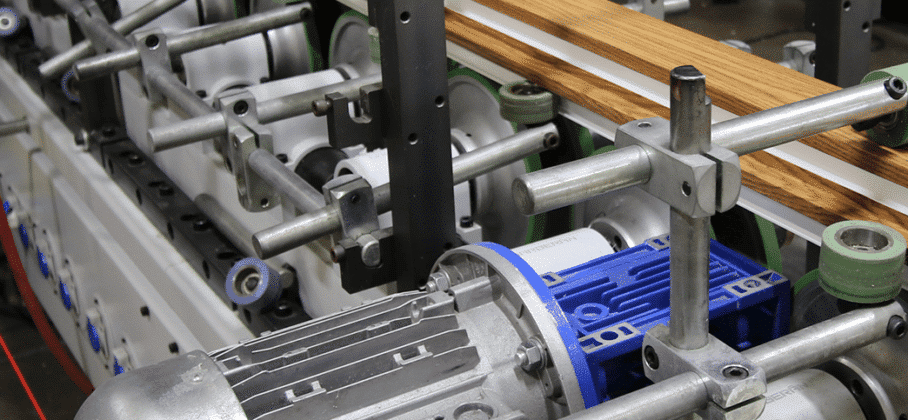
Industrial profile wrapping applies a uniform, factory-controlled film that completely encloses the profile. Because the finish is engineered and applied under repeatable conditions, every piece in a production run looks and performs the same, a consistency that matters when components ship by the thousand into a single project.
The result is a single component carrying both its protective layer and final appearance, with no separate priming, painting, or drying stage on site.
Protection That Pays for Itself: Durability of Wrapped Metal Profiles
Corrosion is one of the most persistent and expensive problems in any operation that relies on metal. Left unchecked, it weakens structures, degrades appearance, and forces premature replacement.
The principle behind preventing it is a continuous barrier isolating the metal from moisture and contaminants; as long as that barrier remains intact, the metal beneath is protected.
The performance standards developed by the American Architectural Manufacturers Association for organic coatings on aluminum extrusions and panels set benchmarks for color retention, gloss, and resistance to weathering through years of real outdoor exposure testing.
Those standards exist precisely because a durable, well-bonded finish is what separates metal that keeps its appearance for decades from metal that fades and degrades early.
This is where wrapped metal profiles earn their place. The bonded film acts as the barrier layer, shielding the underlying metal from moisture, humidity, and airborne contaminants that cause rust and oxidation.
The practical effect is fewer touch-ups, slower deterioration, and longer service life for the component.
Sun, Moisture & Washdowns: Environmental Resistance Built In
Industrial and architectural metal endures temperature swings, UV exposure, washdowns, and constant contact. A quality wrapped finish is formulated to take that punishment, holding its color and integrity where an unprotected surface would fade, pit, or corrode.
For exterior architectural trim and components mounted in demanding settings, that resilience is the difference between a finish that ages gracefully and one that needs replacement.
Everyday Abuse, Lasting Finish: Wear Resistance That Holds
Beyond corrosion, the everyday threat to industrial metal is mechanical: carts, tools, foot traffic, and handling that scuff and gouge exposed surfaces. A wrapped film adds a tough, abrasion-resistant outer layer that absorbs daily contact far better than thin paint, keeping the component looking finished where bare or painted metal would quickly show its age.
Cost-Efficiency: The Long-Term Math of Protective Metal Coatings
A finish that resists corrosion and wear directly reduces the two biggest hidden costs of metal components: maintenance and replacement. Protective coatings applied via wrapping extend service life and reduce the need for touch-ups and refinishing. The total cost of ownership over a component’s lifetime often falls well below that of a cheaper finish that fails early.
There is an efficiency gain at the production stage too. Wrapping delivers a protected, fully finished profile in a single controlled pass, eliminating separate priming, painting, and drying steps a comparable on-site finish would require.
For manufacturers, that means fewer process stages, less rework due to inconsistent paint jobs, and a desired result.
Consistency and Sustainability: Quieter Benefits That Add Up
Two advantages of wrapping are easy to overlook but matter over the course of a project’s lifetime.
The first is consistency:
- Because the film is applied through a controlled, repeatable process, color and texture remain uniform across all components and production batches, without the shade variation that plagues hand-applied paint across multiple lots.
For large architectural or industrial jobs, that uniformity is what makes a finished installation look deliberate rather than patched together.
The second is the low-maintenance:
- A wrapped profile that resists corrosion and wear needs less upkeep, less frequent refinishing, and far less frequent replacement.
A durable finish is, in practical terms, a more sustainable one.
Design: Where Metal Surface Finishing Becomes a Branding Tool
Durability gets a component specified; appearance gets it approved. The strength of modern metal surface finishing through wrapping lies in how protection and aesthetics come together in a single layer. Instead of choosing between a tough finish and an attractive one, you get both.
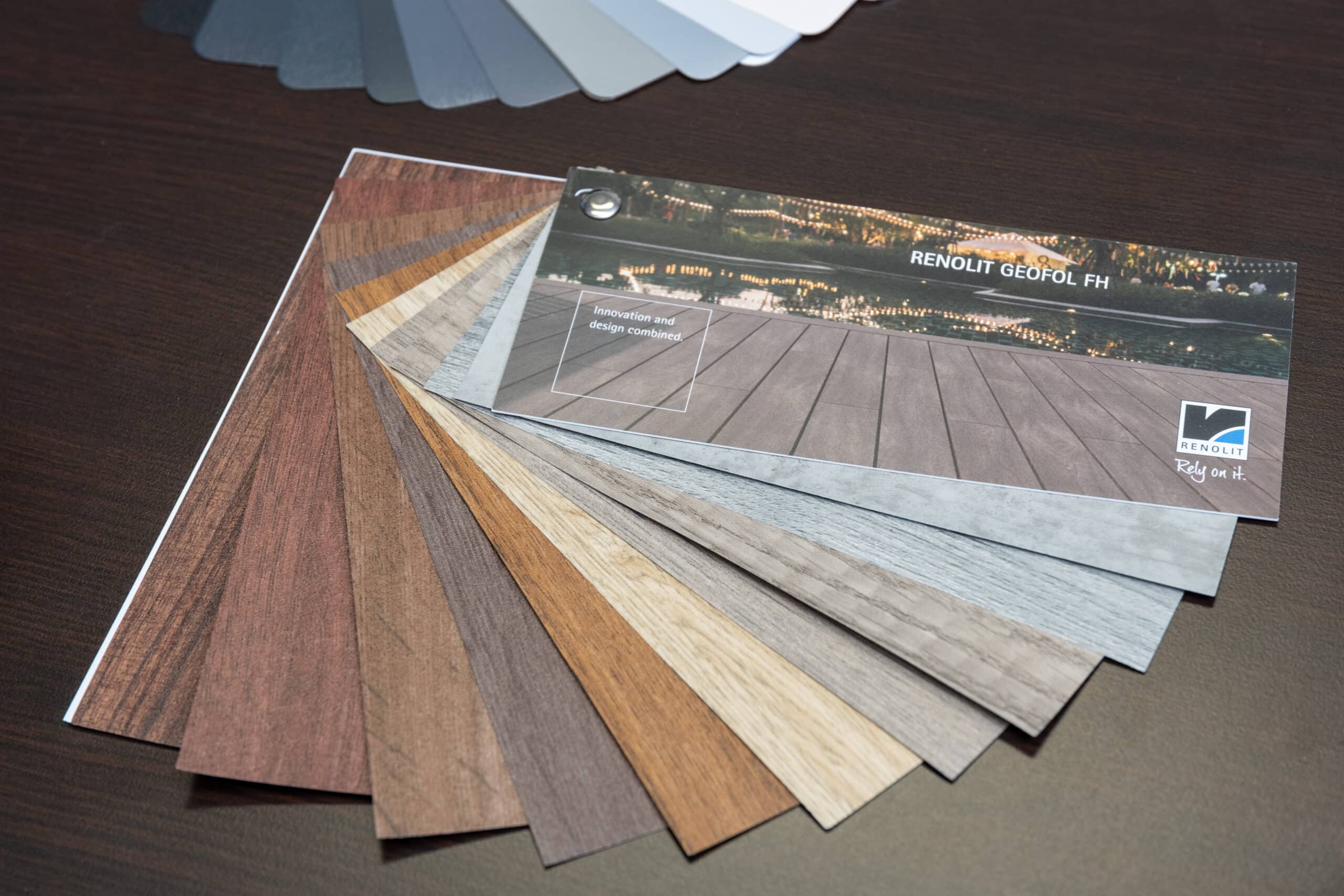
That opens a genuinely wide design palette. Wrapped finishes can deliver sleek metallic textures, solid colors, and realistic woodgrains, letting an industrial extrusion read as warm timber, brushed metal, or a clean architectural tone depending on the project.
Decorative metal profiles finished this way let designers carry a single, coordinated look across windows, doors, framing, and trim without hand-finishing each piece. Because the same film library applies consistently across components, the brushed-silver frame and colored fascia beside it can be matched exactly, batch after batch.
For manufacturers and building owners, that consistency is a quiet branding asset. A signature color or finish applied uniformly across every component reinforces a coherent visual identity. The process repeatability ensures a brand’s look remains identical from the first unit to the last.
Among industrial design finishes, few approaches combine that level of visual control with this much physical protection.
Modern Finishing Options: The Range of Metal Lamination Solutions
The reach of metal lamination solutions makes them suitable across many settings.
Common applications include:
- Architectural metal trim and accents for commercial and residential buildings.
- Industrial components that need both enhanced durability and a finished appearance.
- Decorative framing and paneling for windows and doors.
In each case, the wrap does double duty: protecting the metal beneath while delivering the specified look.
Finish choices generally fall into a few families:
- Solid colors suit clean, modern, or brand-specific schemes.
- Metallic textures echo the character of raw metal while adding a protective layer.
- Woodgrain finishes bring warmth to a material that is otherwise cold and industrial, a popular choice for window and door profiles in architectural work.
That range lets a single supplier finish a wide variety of profiles to match almost any environment, exposure, or design need.
Choosing the Right Finish for Industrial Conditions
Before settling on a look, settle on the environment demands, because conditions dictate what will last.
Components destined for high-humidity, coastal, or chemically aggressive settings require finishes specifically selected for corrosion and environmental resistance.
Parts in high-traffic interiors need a film that resists abrasion and impact.
And where appearance is doing real work such as a visible facade or a branded entrance, color stability and finish consistency move to the top of the list.
Matching the finish to actual service conditions, rather than to a catalog image, is the most reliable way to ensure a component still looks right years after installation. That decision is where good profile-wrapping services prove their value, pairing the right film and process with the job at hand.
Stealth Finishing: Your Trusted Industrial Profile Wrapping Partner
When a metal component has to resist corrosion, shrug off scratches, and still look the part in a finished space, the finish deserves a specialist. Stealth Finishing brings decades of profile-wrapping expertise and state-of-the-art equipment to exactly that challenge.
We deliver precision metal wrapping that protects against rust, moisture, and environmental wear while achieving the metallic textures, colors, and decorative patterns a project calls for.
Explore our aluminum and window and door profiles, or reach out today to discuss the right finish for your next industrial project.
FAQs
How does metal profile wrapping prevent corrosion?
The bonded film forms a continuous barrier around the profile, shielding the underlying metal from moisture, humidity, and contaminants that cause rust and oxidation.
Is a wrapped finish more durable than painting metal on-site?
Generally, yes, because a factory-applied film is bonded under controlled heat and pressure and encloses the full profile, avoiding the thin, chip-prone edges that hand-applied paint often leaves.
What finish options are available for wrapped metal profiles?
Wrapped metal profiles can be finished in solid colors, metallic textures, and woodgrain patterns, giving projects a wide range of durable, decorative options.
What types of metal components can be wrapped?
Architectural trim and accents, industrial components, and decorative framing for windows and doors are all common applications, including complex profiles with multiple faces and curves.
Can wrapping help maintain a consistent brand appearance?
Yes, because the same film is applied through a repeatable process, a chosen color or finish stays identical across every component from the first unit to the last.