Really Works
Custom color matching for profile laminates starts and ends with a physical part. Send a hex code, and you will waste three rounds of samples chasing a color that was never going to match. Send a physical target, the actual substrate, and the gloss you need, and most matches come close in one or two rounds.
After more than 35 years wrapping profiles for window, door, siding, and molding manufacturers, our experts see a consistent pattern. Matches rarely stall because of the film. They stall because the target was ambiguous, the substrate changed between the sample and the order, or the two parties judged the part under different lighting conditions.
Why Color Behaves Differently on Different Profile Laminates
A profile laminate is a decorative film or veneer bonded to the full, contoured surface of an extruded or milled profile, rather than to a flat panel. On a flat panel, light strikes a single surface at one angle. On a profile, the same film wraps a bullnose, drops into a groove, and stretches over a radius, so it reads lighter on the crown and darker in the cove.
Custom color matching is the process of selecting or formulating a decorative film so that its finished appearance on a specified substrate falls within an agreed-upon color tolerance of a physical target. A match approved on white PVC is not automatically a match on natural MDF.
Delta E is defined as a single number expressing the total difference between two measured colors in a uniform color space, where lower means closer. Metamerism is the phenomenon in which two samples match under one light source but visibly differ under another.
The Delta E math is published in ASTM D2244, the standard practice for calculating color tolerances and color differences from instrumentally measured color coordinates. Hence, your lab and ours land on the same number when the geometry and illuminant match.
Stages of a Custom Color Match: From Target to Production Approval
Knowing which stage you are in tells you what decision is actually on the table.
Stage One: Define the Target in Physical Form
The target is whatever the profile has to match: a competitor’s sash, a powder-coated extrusion, a painted door slab, or a hardware finish. We need it in hand and to know which face is the reference. If it is a color standard, name the system and the number. If it is an old part, tell us how long it sat outdoors, because a five-year-old exterior part is no longer the color it shipped in.
Stage Two: Film Selection and Sourcing
A custom match is one of three things: a stock film already inside tolerance, a stock film modified in gloss or texture, or a new print or formulation from the mill. The third path involves lead time and a minimum order quantity, so we name it in the first review. That answer affects the schedule more than anything else.
Stage Three: Build a Real First Article
A first article is the initial wrapped part produced under production conditions and submitted for approval before the rest of the order runs. It is the only sample that matters because a film swatch laid across a profile has never been heated, stretched, or bonded.
Stage Four: Approve Under an Agreed Light Source
Approve the part under the light it will live under and include that condition in the approval. ASTM D1729 recommends using simulated average daylight at D65 for critical color evaluation and specifies the viewing setup rather than relying on overhead fixtures. Approving under warehouse fluorescents and rejecting under showroom halogen is a metamerism failure, not a manufacturing failure.
Custom Color Match Paths: Which One Fits Your Program
| Path | Best For | Color Risk | Schedule Impact |
| Stock film in tolerance | Architectural whites, bronzes, clays, wood grains | Lowest, proven history | Shortest, often stock |
| Stock film, modified gloss | Coated targets where hue is close but sheen is off | Low to moderate | Tied to mill run schedule |
| New print or formulation | Proprietary brand colors, exact competitor matches | Highest, no history | Longest, minimum order applies |
| Multi-supplier match | Profiles matching extruded, coated, and hardware parts | High, chemistries age differently | Add cross-supplier approval |
Why the Same Film Reads Differently on Two Substrates
Color is not a property of the film alone. It is the film, what sits under it, and how the surface handles light.
Substrate Color and Absorbency
Decorative films are not perfectly opaque. A lighter film over a dark or variable substrate picks up a shift no one predicted from the swatch. Porous substrates pull adhesive differently, changing how the film lays down. Our wood and composite, plastics, and metal profile wrapping lines run the same films, so a match is approved per material, not once per program.
Gloss and Texture
Gloss level is the measured amount of light a surface reflects at a specified angle, reported in gloss units. Raising gloss makes the color read deeper. Flatten it, and the same color reads lighter and chalkier. Two films with identical measured color can look different at 10 gloss versus 40 gloss. The embossed texture shifts it again by scattering light across the grain.
Production Conditions and End Use
Film temperature, line speed, and roller pressure influence how far the film stretches over a radius. Stretched film is thinner, which means more substrate influence on where the eye lands first. Exterior work adds durability on top of the match. FGIA maintains AAMA 307, the specification for laminates used on AAMA-certified profiles. It sets minimum requirements for decorative laminates on certified profiles, covering weathering, chemical resistance, detergent resistance, and sealant compatibility.
How To Hold A Consistent Color Across Production Runs
A one-time match is a sample. A repeatable match is a program.
Keep a Master Retain, a Lot Trail, and a Number
A master retainer is a sealed physical sample of the approved color that both supplier and customer keep as the reference for all future runs. Retains settle disputes because measurement alone cannot, as it carries gloss, texture, and grain register along with color. Record the film lot for every run so a vague complaint about drift becomes a traceable event.
Agree on a Delta E ceiling and the instrument geometry before the first order ships. Without a number, every future run gets judged against memory, and memory drifts further than film.
Re-approve When Anything Upstream Changes
A new substrate supplier, a reformulated PVC, or a tighter radius can change the finished appearance while the film stays identical. Treat any of these as a trigger for a fresh first article.
What to Send With a Custom Color Match Request
- A physical target larger than a business card, with the reference face marked.
- The exact substrate and profile you intend to run.
- Required gloss level, or a sample showing the sheen you want.
- Texture, embossing, and grain direction for wood-grain films.
- Interior or exterior end use, plus any certification the assembly must meet.
- The light source the part will be approved under.
- Annual volume, which decides whether a custom film run is viable.
Why Manufacturers Bring Custom Matches to Stealth Finishing
Color problems get solved by capacity and repeatability, not promises. We provide custom profile wrapping solutions across Texas, Nevada, and Ohio. A match approved once can run at the plant closest to your location without restarting the approval process.
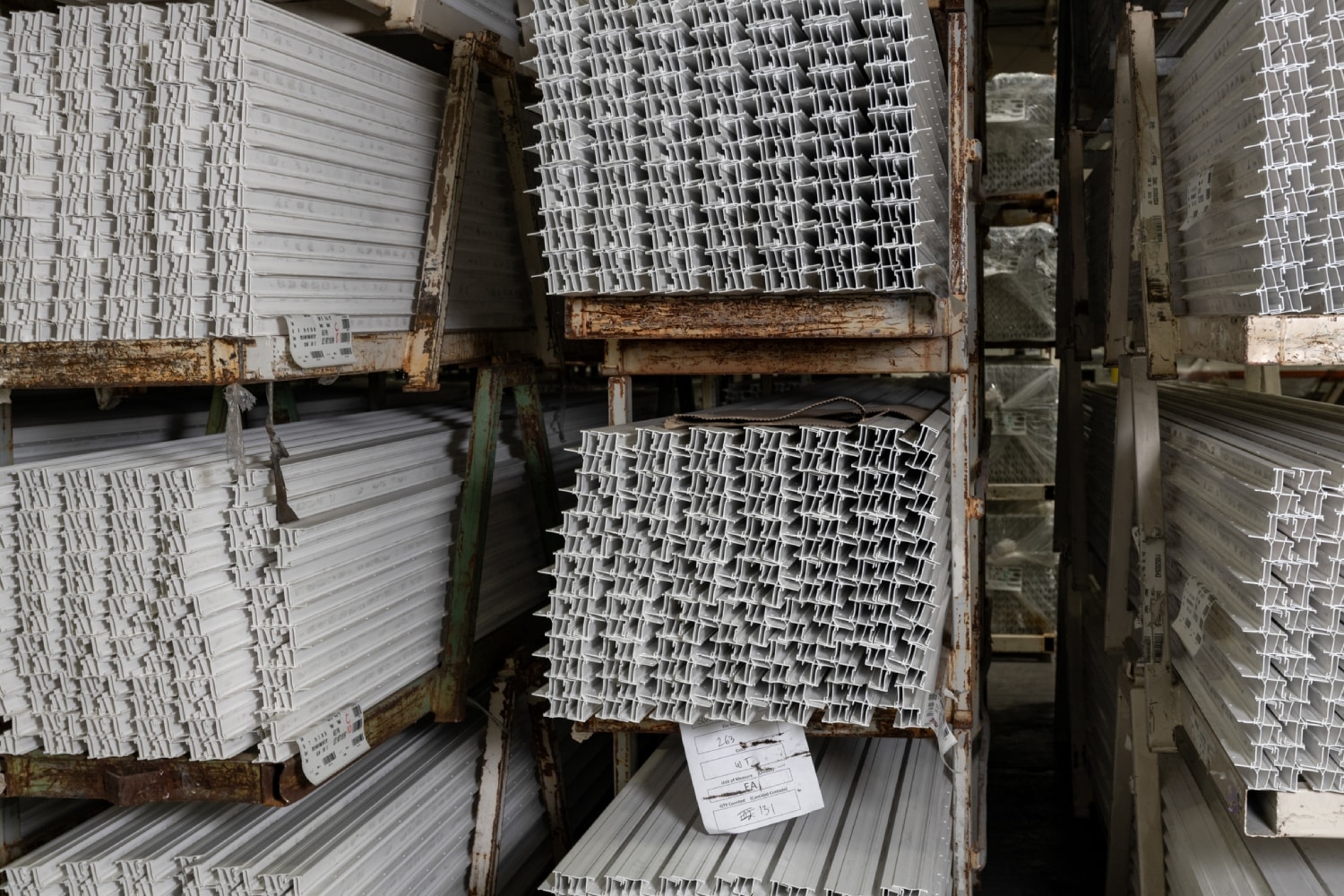
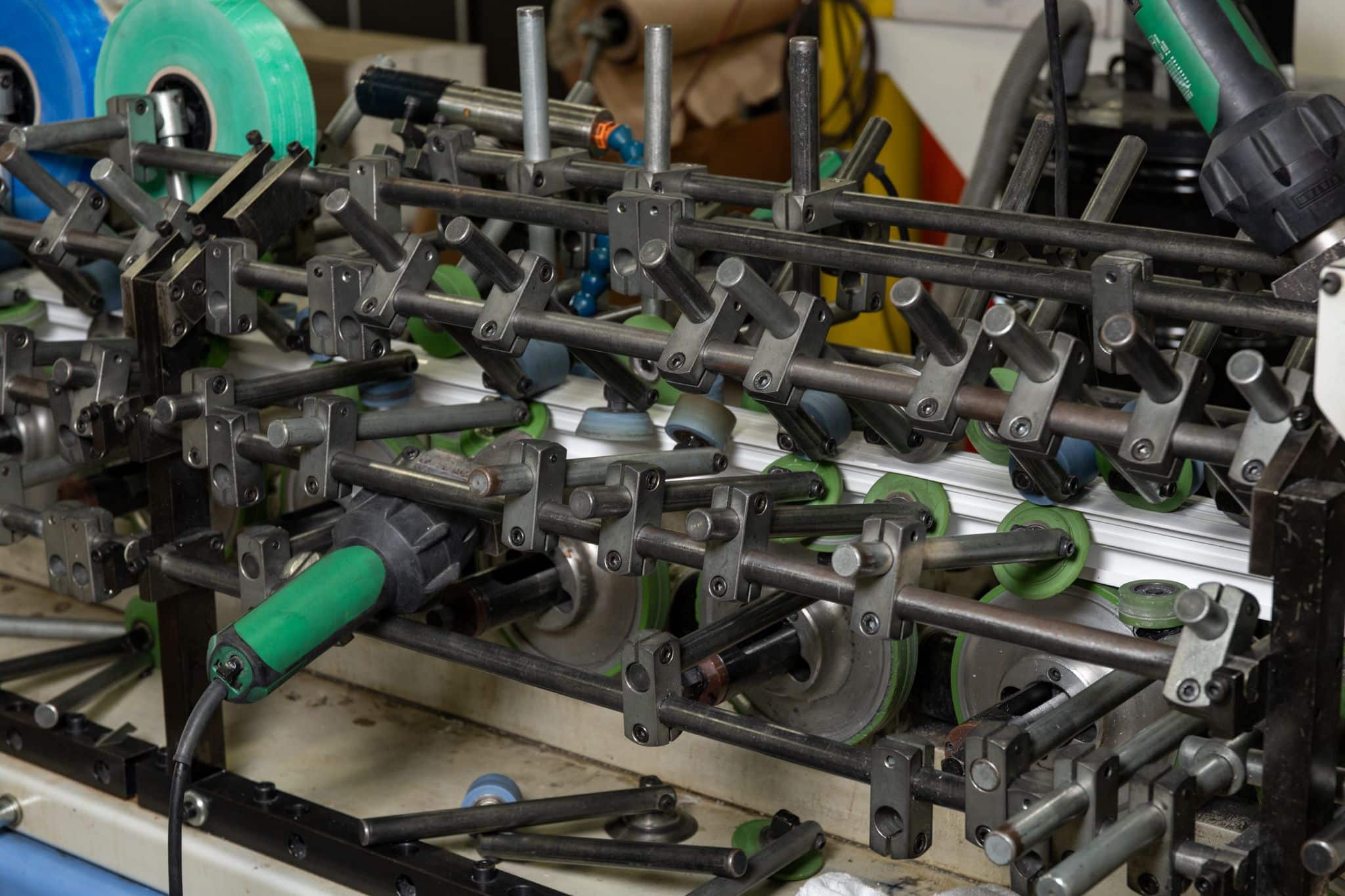
Our equipment handles profiles from 1 to 10 inches wide, including standard PVC vinyl extrusions such as sash, head, jamb, and sill, as well as wood, MDF, and HDF moldings. Our Barberan slitter takes film up to 56 inches wide and cuts it to 20mm. This allows narrow trim and wide siding profiles to be pulled from the same approved master roll. That keeps a custom finish consistent from the first article through the tenth reorder.
If you have a target color and a profile that must match it, we can tell you in one review whether it is a stock film, a gloss adjustment, or a custom run, and what each option does to your schedule.
Contact us today with your specifications and target sample for a candid read first.
FAQs
How long does a custom color match for profile laminates take?
Timelines depend entirely on which path the match takes. A stock decorative film that is already within tolerance can move to a first article quickly because the film is in production and often in inventory. A gloss or texture modification adds time tied to the film mill’s run schedule. A fully custom print or formulation is the longest path because it carries development time and a minimum order quantity. The fastest way to shorten any of these is to provide a physical target and the exact substrate up front. Ambiguity in the target results in additional sample rounds. Ask your profile wrapping supplier which path applies before setting a launch date.
Can a wrapped profile be matched to a powder coated or painted component?
Yes, it is one of the most common requests in window, door, and siding programs, but it must be treated as a cross-material match rather than a simple color match. Coated metal and laminated profiles reflect and age light differently, so a pair that matches on day one can separate over years of exposure. Approve the match with both components physically side by side under a single agreed light source, and record the gloss of each. For assemblies combining wrapped profiles with coated extrusions, involve both suppliers in the approval process so no one matches to a secondhand sample.
What is an acceptable Delta E for a custom laminate color match?
There is no single industry number because acceptable tolerance depends on the application, how closely components sit together, and whether parts are viewed indoors or outdoors. What matters more than the specific figure is that the buyer and supplier agree on a numeric ceiling, color space, and instrument geometry before production starts. ASTM D2244 defines how the difference is calculated so both parties can compute the same value from the same measurement. Tighter tolerances suit components that butt against each other in the same sightline. Looser tolerances are reasonable where parts are separated or viewed independently.
Why did my laminate color look right in the sample and wrong in production?
The four usual causes are a substrate change between sample and order, a gloss or texture difference never specified, a lighting difference between approval and inspection, and film stretch over tight radii that thins the film and lets the substrate influence the reading. Each is diagnosable. Pull the approved master retain, place it next to the rejected part under the agreed light source, and measure both. This usually isolates the variable in one sitting. If the substrate changed, a fresh first article is the correct fix rather than adjusting the film.
Do exterior profile laminates need to meet a specific standard?
If the profile is part of a certified window, door, or skylight assembly, the decorative laminate must meet the applicable industry specification, not just a visual match. FGIA publishes AAMA 307, the specification for laminates used on AAMA-certified profiles. It sets minimum requirements for decorative laminate materials on interior and exterior surfaces of certified profiles, covering weathering, chemical resistance, detergent resistance, and sealant compatibility. Exterior color programs should also account for heat buildup on dark colors, a documented concern for rigid PVC profiles. Confirm certification requirements before the color review, as it can narrow the list of usable films.